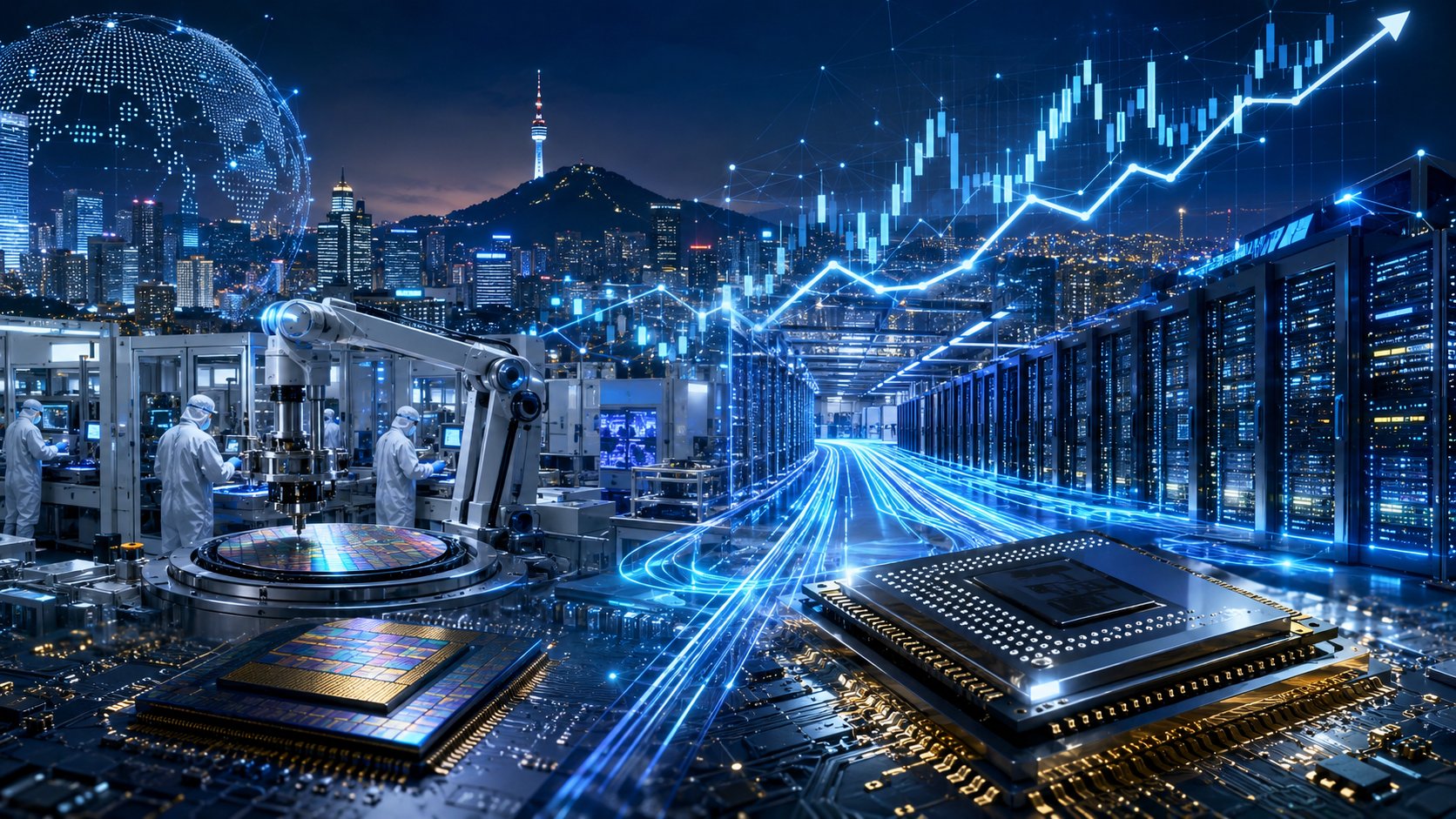
SK Hynix, South Korea’s dominant memory chip maker, is on the verge of a historic milestone.
Its market capitalization stood at approximately $948–$951 billion as of May 14, 2026, making it the world’s 14th most valuable publicly traded company. The surge stems from one force: insatiable global demand for AI infrastructure memory.
Sixteen months ago, the company was worth less than $100 billion.
How a Single Chip Category Rewrote SK Hynix’s Valuation
SK Hynix is the world’s leading supplier of high-bandwidth memory (HBM), the specialized chips that power AI servers made by companies such as Nvidia. HBM demand has outpaced supply for more than two years, and SK Hynix has been the primary beneficiary.
Shares have risen more than 200% so far in 2026, following a 274% climb in 2025. The company held approximately 57% of the global HBM market as of the most recent quarter, according to Counterpoint Research.
Q1 2026 Results: Records Across Every Metric
On April 22, 2026, SK Hynix released its first-quarter results. Revenue reached KRW 52.58 trillion (approximately $35.55 billion), an increase of 198% year-over-year and the first time the company has surpassed KRW 50 trillion in a single quarter.
Operating profit came in at KRW 37.61 trillion, with an operating margin of 72%. Net profit reached KRW 40.35 trillion, representing a 77% net margin.
In its earnings statement, the company said: “Despite the fact that first quarter is typically a seasonal downturn, strong demand persisted due to expanded investments in AI infrastructure.”
An SK Hynix executive added on the earnings call: “The importance of memory has become greater than ever … as this supply-demand imbalance persists, customers are prioritizing procurement over price.”
FY2025 Set the Stage for the Current Run
The Q1 2026 performance followed a record-breaking full year in 2025. SK Hynix posted annual revenue of KRW 97.1 trillion and operating profit of KRW 47.2 trillion, representing year-on-year growth of 47% and 101% respectively.
HBM revenue more than doubled year-on-year in 2025, making it the primary driver of the company’s record margins. The Q4 2025 operating margin alone reached 58%.
What This Means for South Korea’s Markets
If SK Hynix crosses the $1 trillion threshold, South Korea would become the first country outside the United States to have two trillion-dollar companies at the same time. Samsung Electronics reached that milestone earlier in May 2026.
South Korea’s benchmark KOSPI index has risen more than 86% in 2026, its strongest run since 1999.
Foreign capital has poured into Korean chipmakers, with one Sydney-based market analyst describing sentiment as driven by fear of missing out on AI-related names.
Supply Constraints and the Road Ahead
Demand is not the only issue. SK Group Chairman Chey Tae-won stated in March 2026 that the global chip wafer shortage is likely to persist until 2030, as expanding capacity takes four to five years. He projected a supply shortfall exceeding 20%.
To address that gap, SK Hynix announced plans to invest KRW 19 trillion in a new manufacturing plant in South Korea.
The company is also constructing its first facility at the Yongin Semiconductor Cluster, targeting mid-to-long-term production capacity.
Meanwhile, competition is rising. Samsung disclosed in February 2026 that it had begun shipping its first HBM4 chips to customers, nearly a year after SK Hynix delivered its HBM4 samples.
SK Hynix said it plans to “extend its overwhelming market share in HBM3 and HBM3E to HBM4.”
What Comes Next
$1 trillion market cap watch: Based on current share price and exchange rate, the threshold is within approximately 5% of current levels.